Hardwood Flooring Installation in Durham & Raleigh, NC
Solid and engineered hardwood installed by a licensed, insured local crew serving Durham, Raleigh, and Chapel Hill since 2010.
Hardwood Floors That Last
Triangle Floors is a licensed and insured flooring company serving Durham, Raleigh, Cary, and Chapel Hill, NC since 2010. We install solid and engineered hardwood flooring for residential and commercial clients, with free in-home or showroom estimates. Contact us at (919) 797-0183 or trianglefloors@gmail.com.
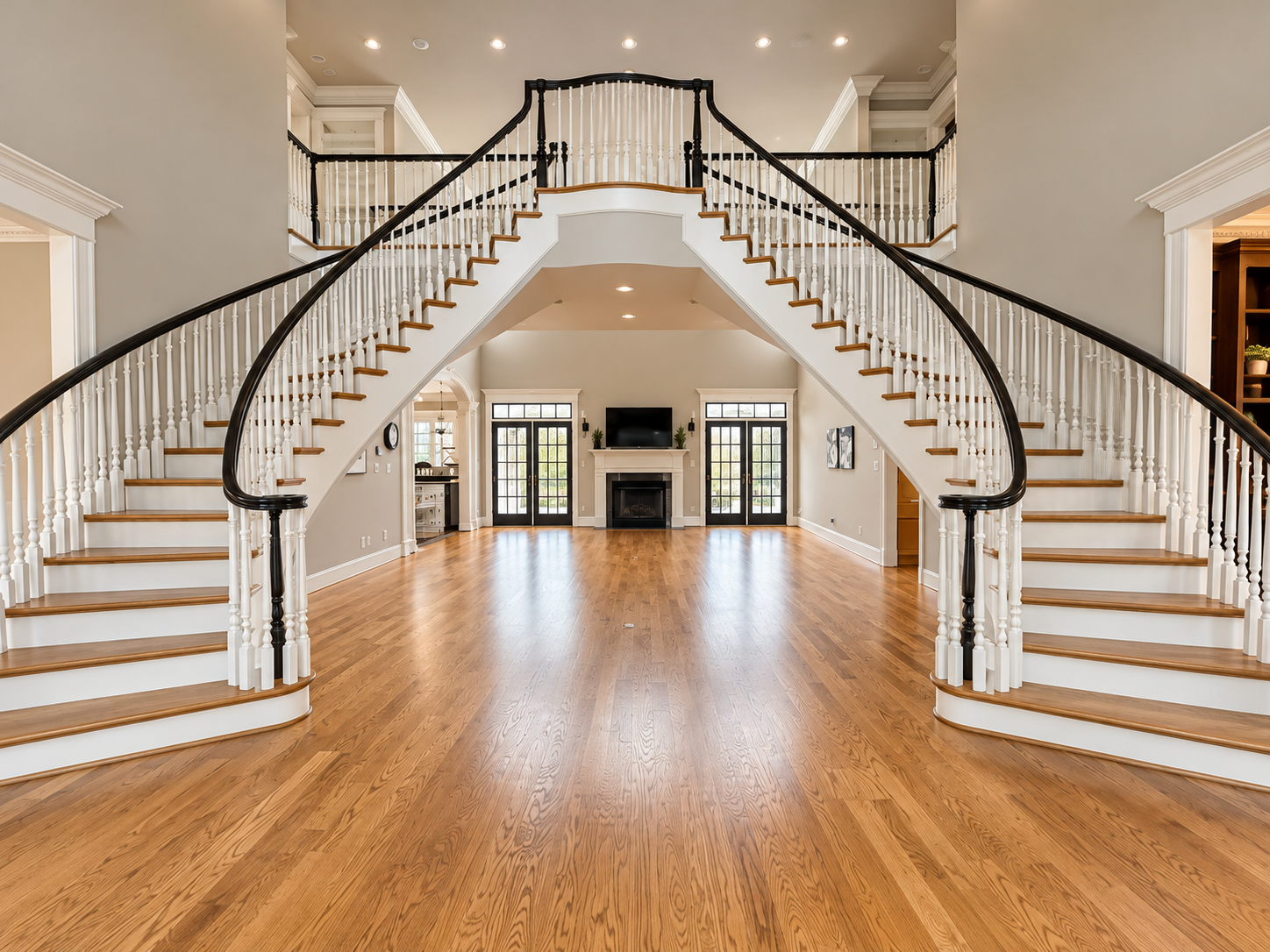
Nothing transforms a home like new hardwood floors. Triangle Floors has installed hardwood flooring throughout the Triangle since 2010, offering both solid and engineered wood options with precise, professional installation from start to finish. Whether you’re renovating a single room or flooring an entire home, our licensed and insured team delivers a flawless, long-lasting result.
With over 100+ flooring options available, we help you choose the right wood species, plank width, and finish to match your home’s style and budget — then handle every step of installation with the craftsmanship the Triangle has trusted for over a decade.
Solid vs. Engineered Hardwood — Which Is Right for You?
Solid Hardwood
Solid Hardwood Flooring: Built for Lasting Beauty
Milled from a single piece of wood, solid hardwood offers timeless beauty and can be sanded and refinished multiple times throughout its lifespan, making it a long-term investment for your home. It is best suited for rooms at or above ground level with stable indoor humidity.
How many times can solid hardwood be refinished?
The answer depends on the amount of wood remaining above the tongue-and-groove joint, known as the wear layer. Each full sanding removes some of this wood, so the floor’s thickness and previous refinishing history help determine whether another sanding is possible.
According to the National Wood Flooring Association (NWFA), several factors affect a floor’s refinishing potential:
Remaining wear layer: Enough wood must remain above the tongue and groove to allow sanding without exposing fasteners or weakening the boards.
Floor condition and flatness: Uneven surfaces may require more material removal. Moisture-related problems must be addressed before refinishing.
Depth of damage: Deep scratches, gouges, and stains may require additional sanding or individual board replacement.
Equipment and technique: The contractor’s skill, sanding equipment, and abrasive selection influence how much wood is removed.
Engineered Hardwood
Engineered Hardwood Flooring: Natural Beauty with Added Stability
Constructed with a real hardwood top layer bonded over a layered wood core, engineered hardwood combines the beauty of real wood with added dimensional stability. Its construction helps reduce movement caused by changes in temperature and humidity, making it a versatile choice for homes throughout Durham, Raleigh, and Chapel Hill.
Manufacturer-approved products can be installed in basements and over radiant heating when moisture conditions and installation requirements are met. Engineered hardwood still requires proper indoor humidity control and protection from standing water.
Can Engineered Hardwood Be Sanded and Refinished?
Many engineered hardwood floors can be sanded and refinished. Their refinishing potential depends on the remaining thickness of the real-wood surface, known as the wear layer, along with the floor’s condition, previous sanding history, and manufacturer’s recommendations.
The National Wood Flooring Association (NWFA) generally advises against full sanding when the remaining wear layer is below approximately 2.5 mm (3/32 inch). Its Engineered Wood Flooring Refinishable Program requires a minimum wear layer of 2.5 mm for factory-finished products and 3.2 mm for unfinished products. Textured or distressed products must have at least 2.5 mm at the lowest point to qualify.
Thicker wear layers generally offer greater refinishing potential, but thickness alone does not guarantee a specific number of sandings.
For detailed refinishing guidance, see our refinishing page.
Our Step-by-Step Process
1. In-Home or Showroom Consultation
We assess your space, discuss wood species, plank sizes, and finishes, and provide a detailed, free estimate.
2. Subfloor Preparation
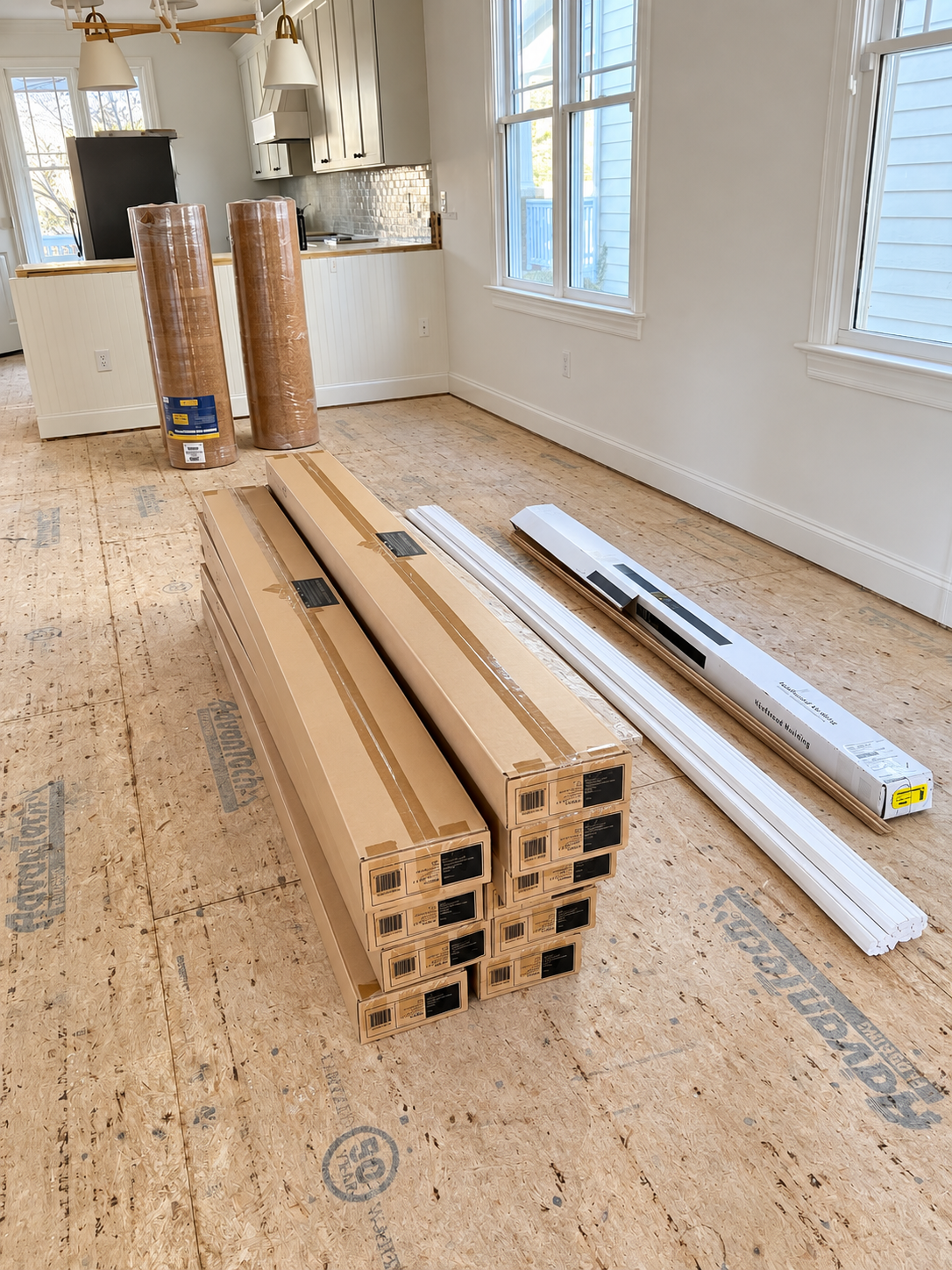
Before any wood goes down, we inspect and prep the subfloor — leveling, repairing, and ensuring it’s clean and dry to prevent future issues. We always use moisture meters to check that subfloors are within standard levels, a leading cause for floor buckling or damage.
3. Acclimation
Hardwood flooring needs time to adjust to your home’s temperature and humidity before installation to help reduce the risk of warping or gaps. We generally recommend allowing seven days for acclimation, although the exact time depends on the flooring manufacturer’s requirements and conditions in your home. Before installation, we check the moisture levels in both the hardwood and subfloor to confirm they meet the requirements for your flooring.
4. Precision Installation
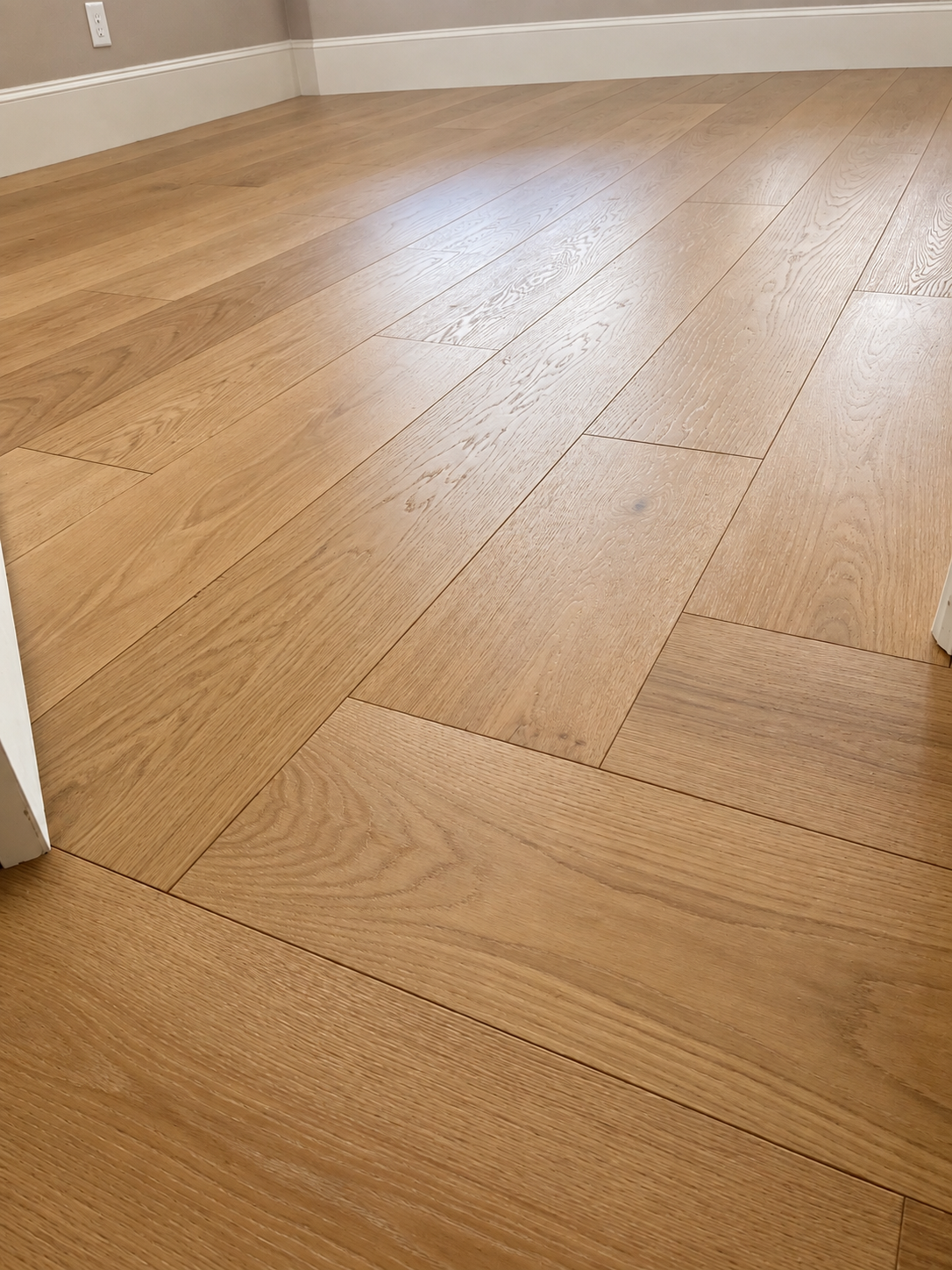
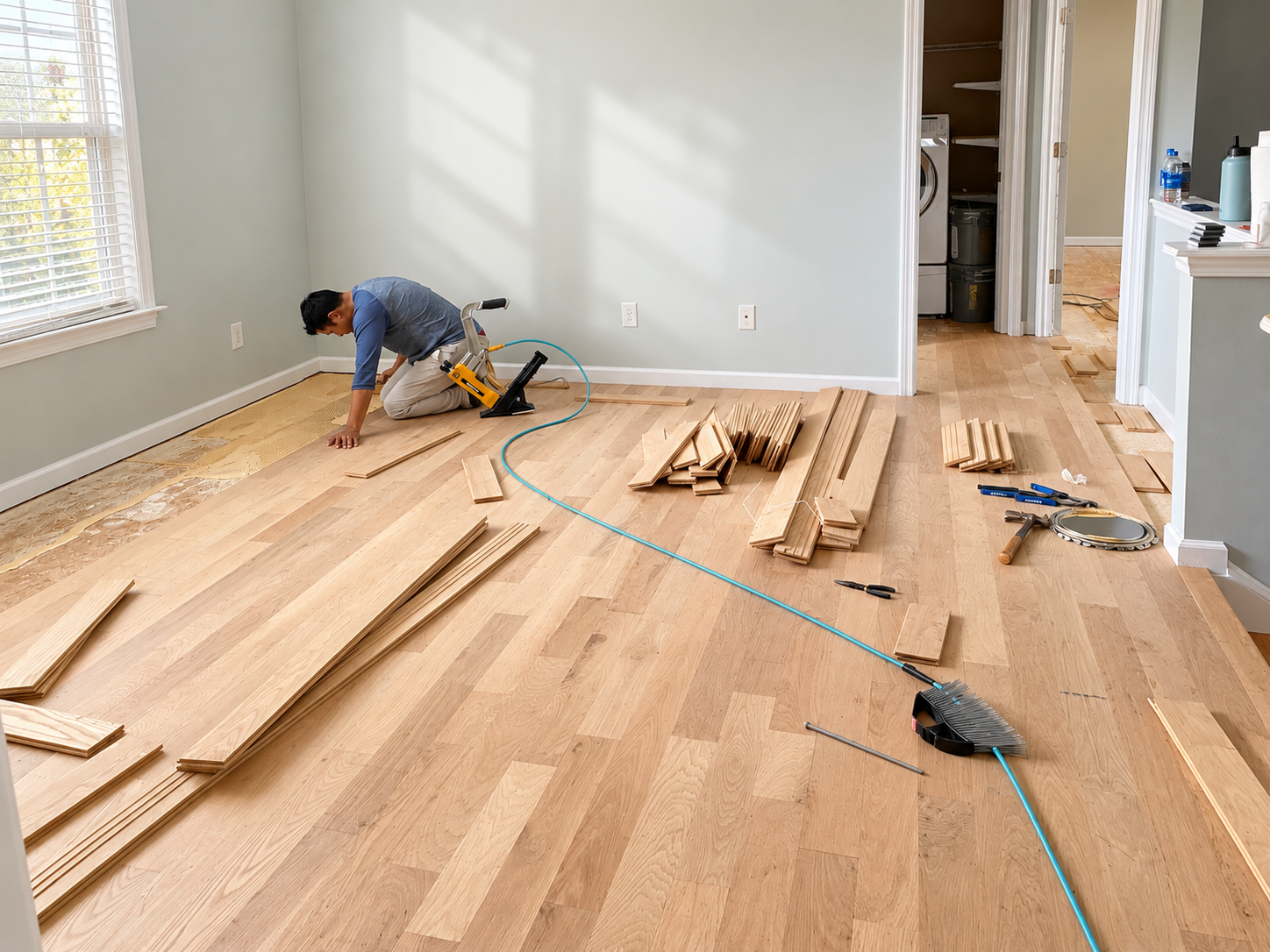
Our installers lay each plank with careful attention to pattern, spacing, and transitions, whether you choose a classic straight layout, herringbone, or a custom design. For wider planks, including some over 4 inches wide, we may combine nailing with a glue-assist method, depending on the flooring manufacturer’s requirements.
For upper-floor installations where sound reduction is a priority, we can use an approved 1/4-inch or 1/2-inch cork underlayment with a double-stick installation. This process involves bonding the cork to the subfloor, then bonding the hardwood to the cork using compatible adhesives. The flooring, cork thickness, and adhesives are selected according to the manufacturers’ specifications.
5. Finishing Touches
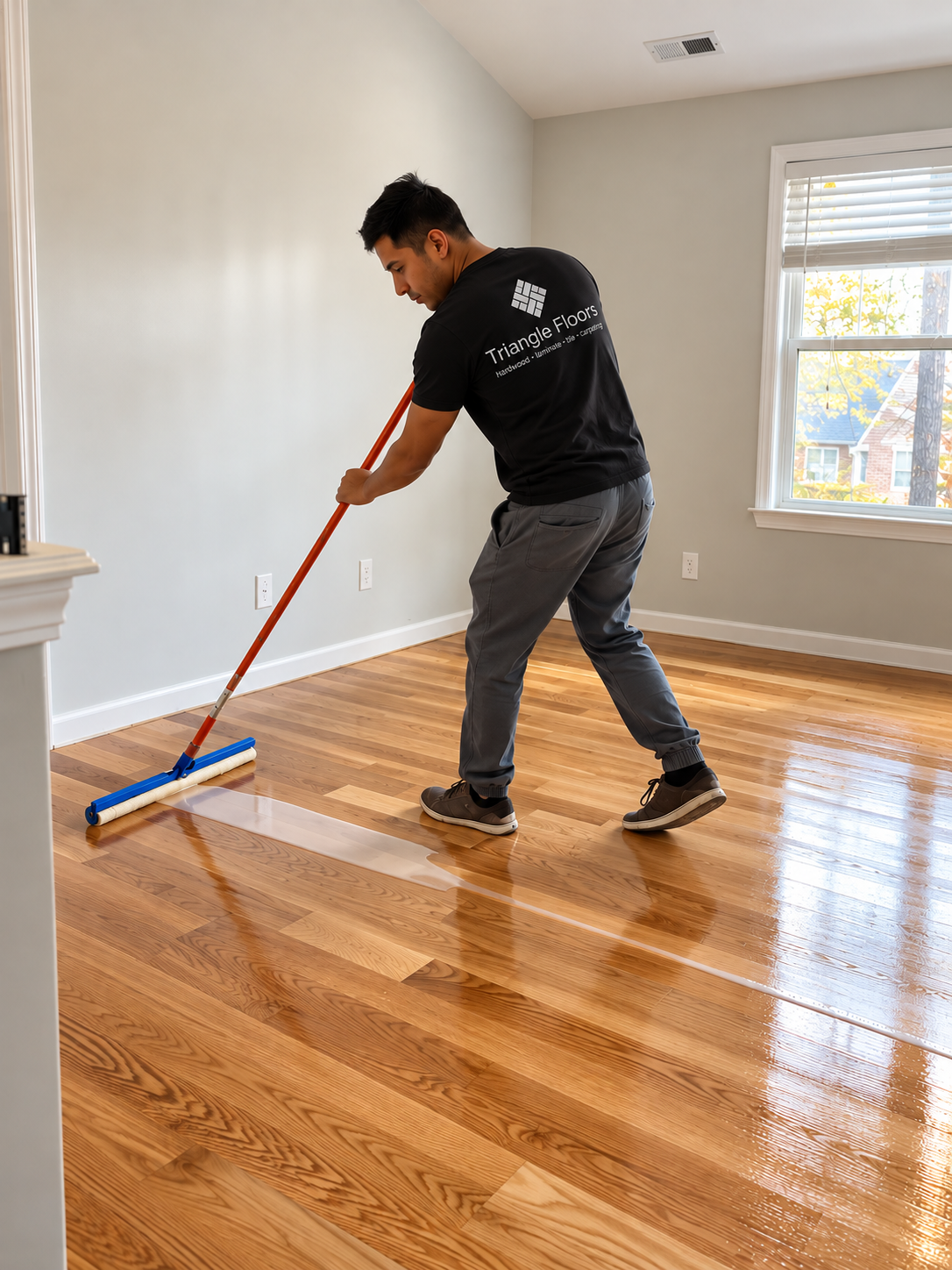
We install trim, transitions, and thresholds, then complete a full walkthrough to make sure every board meets our quality standard.
Why Homeowners Choose Triangle Floors
• Locally owned and operated since 2010, with deep experience in Triangle-area homes
• Licensed and insured flooring contractor
• 100+ flooring options, including solid and engineered hardwood in a range of species, widths, and finishes
• Precise, methodical installation process built to prevent common issues like gapping, squeaking, and uneven transitions
• Free in-home or showroom consultation before you commit to a project
• Residential and commercial installation experience
Areas We Serve
Triangle Floors installs hardwood flooring throughout Durham, Raleigh, Cary, Chapel Hill, and the surrounding Triangle area.

Frequently Asked Questions
How much does hardwood floor installation cost?
Cost depends on wood species, plank size, room size, and subfloor condition. Engineered hardwood is often more budget-friendly than solid hardwood. Contact us for a free, no-obligation estimate tailored to your space.
How long does installation take?
Most residential installations take 2–5 days depending on square footage, layout complexity, and whether old flooring needs to be removed first.
Can hardwood be installed over my existing floor?
Yes, in many cases! Whether new hardwood can be installed directly over your existing floor depends on the type of material, its structural condition, and the overall subfloor height. According to NWFA standards:
Existing Hardwood: Solid wood can be nailed over existing solid wood floors, provided the new planks are installed perpendicular or diagonally to the old floorboards to ensure structural stability.
Tile or Vinyl: Engineered or floating hardwood can often be installed directly over clean, well-bonded ceramic tile, VCT, or vinyl flooring.
Carpet & Underlayment: Soft or floating materials like carpet, padding, and tack strips must always be completely removed first.
Note: Your existing surface must be clean, dry, flat, and structurally sound without any squeaks or moisture issues.
What’s the difference in durability between solid and engineered hardwood?
Solid hardwood can be refinished multiple times over decades, while engineered hardwood offers better moisture resistance but fewer refinishing cycles. We’ll help you weigh durability against your specific room and lifestyle needs.
Do you install hardwood in kitchens and bathrooms?
Hardwood can be installed in kitchens with proper sealing, but we typically recommend engineered hardwood or waterproof LVP for bathrooms and other high-moisture areas. Ask us about the best option for your space.
Ready to Start Your Hardwood Flooring Project?
Get a free estimate for hardwood flooring installation in Durham, Raleigh, or anywhere in the Triangle.
📍 3161 Hillsborough Rd, Suite B, Durham, NC 27705
📞 (919) 797-0183
🕒 Monday–Friday 10am–6pm | Saturday 10am–3pm | Sunday Closed
Contact Us for a Free Estimate